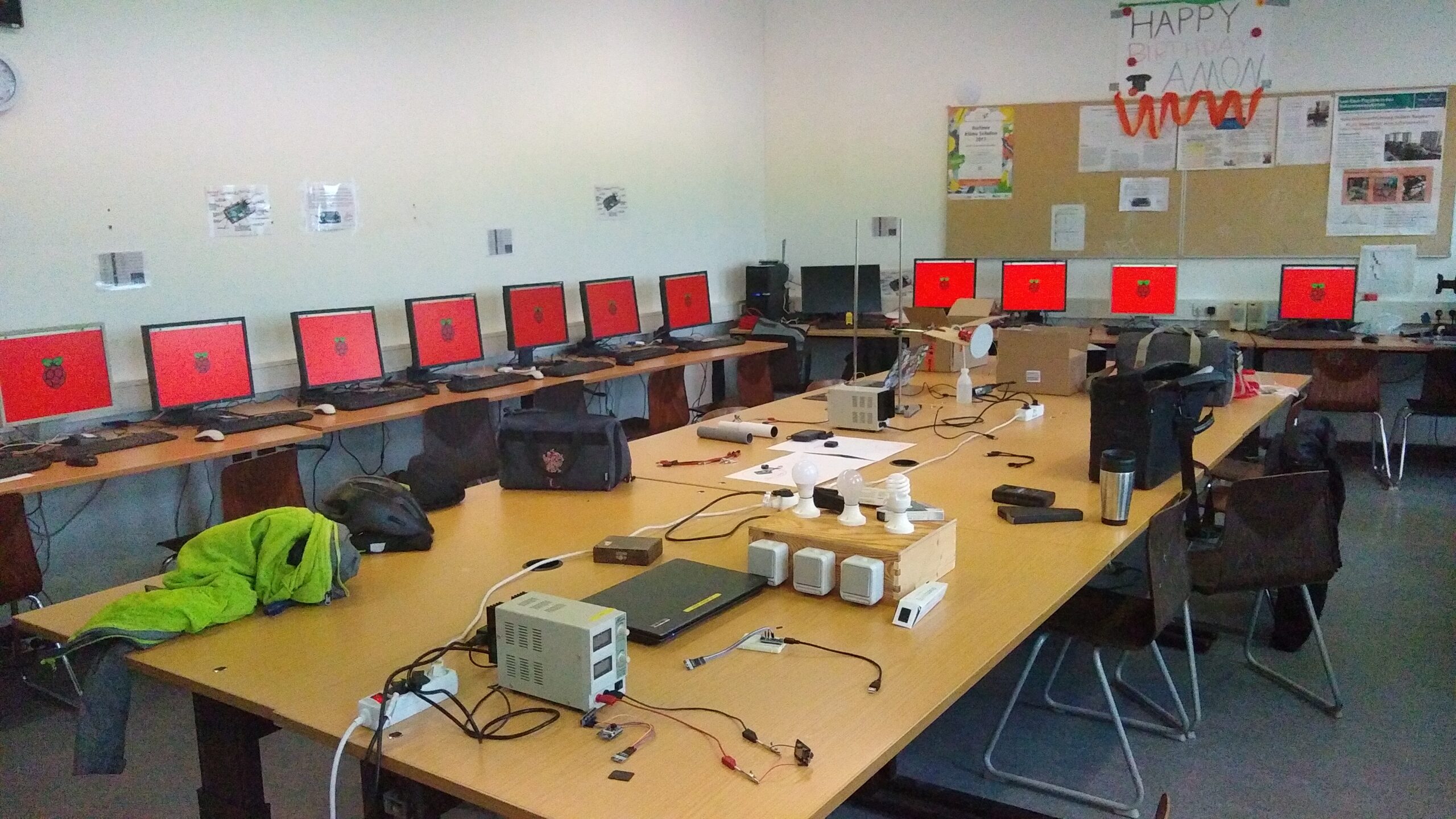
For some years now we have set up a classroom in our school with 12 Raspberry Pi work places. The devices are heavily used in everyday school life. Our Raspberry Pis are mainly used in physics classes, but sometimes also for programming or hardware and electronics tinkering e.g. with the Arduino.
How to best use the devices for school lessons was a long learning process, because again and again the students changed important system settings on the devices so that they no longer worked properly or could no longer boot. Although the Raspberry Pi4 has become significantly faster than the old models, setting up the Raspberry OS takes a lot of effort and can be a tedious task. System updates take a lot of time and the slow internet connection at our school means that updates often take many hours. During this time, you cannot always stay on site as a teacher, but now we have found a way to maintain the devices from afar.
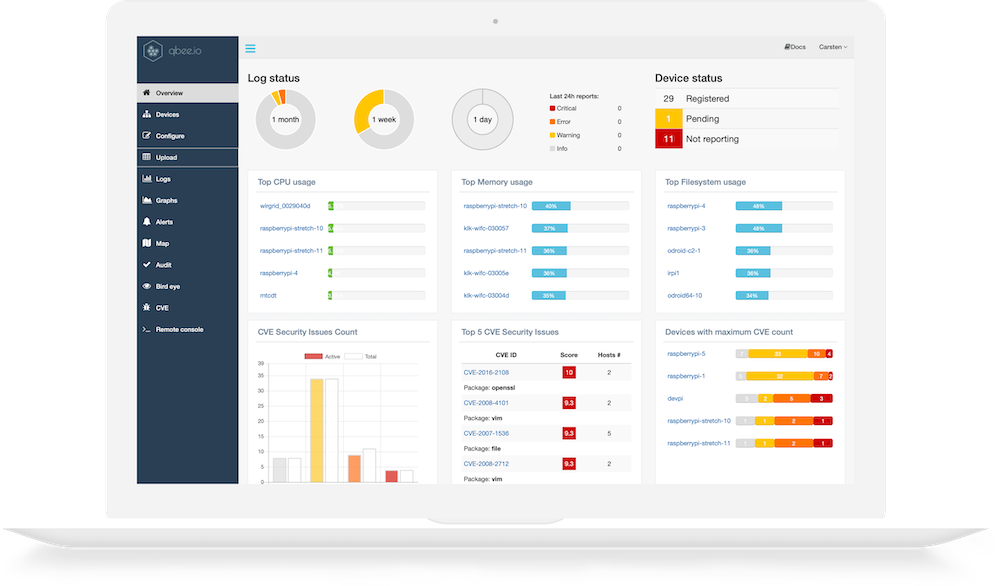
The Norwegian startup qbee AS has provided our school with a test version of remote maintenance software for embedded devices, with which all important settings can also be made from home. It allows us to manage all our embedded Linux -based devices from one dashboard.
 The platform is designed to help users achieve four major things including: remote access, security, automation, and device monitoring. For remote access, qbee.io allows connections over SSH but it can also map any other port such as web servers on 80/443 and Node-Red on 1880 or VNC. Out of the box, qbee routes all ports through a VPN connection using https on port 443. For Security, qbee.io performs actions like check firmware libraries for CVE vulnerabilities, checks if newly updated libraries are available and make suggestions on upgrades, check which users are active and how old the passwords are (people tend to forget to remove pre-configured support accounts), rotate ssh keys, and close all incoming ports (ssh is routed through VPN). All of these actions and more are combined to ensure that deployments stay secure.
One of the delightful things about qbee is its vendor-agnostic nature which allows it to work without the need for software development or containers. It works via the use of a lightweight, secure qbee agent packages which when on your IoT deployment, constantly monitors your system, receiving state information from the qbee backend server and autonomously enforcing the received data in the field.
The qbee agent packages currently exist for all Debian based systems and can be custom created for any other Linux based distribution. The absence of software development activities in qbee deployment makes it not just easy and fast to deploy, but also increases the range of devices(Legacy or new) on which it can be deployed.
Qbee currently has 3 user plans including: “Small” which covers 1-25 devices at $4.30/month, “Medium” which covers 26-100 devices at $1.55/month, and “Large” which covers 101 – 250 devices at $0.90/month. According to Carsten Lehbrink, the CEO of qbee, it is planned to provide educational institutions with free licenses.