How students, teachers, radio amateurs and makers brought a historic satellite earth station back to life — and connected its 1990s industrial control system to a Raspberry Pi.
A school project from Berlin used a Raspberry Pi, industrial I/O HATs, Python and NASA Horizons data to reactivate the historic Neu Golm satellite earth station.
A message from two physics teachers
In February 2026, I received a message from two physics teachers at the Robert-Havemann-Gymnasium in Berlin. Both are enthusiastic amateur radio operators, and I have been working with them on educational technology projects for nearly a decade.
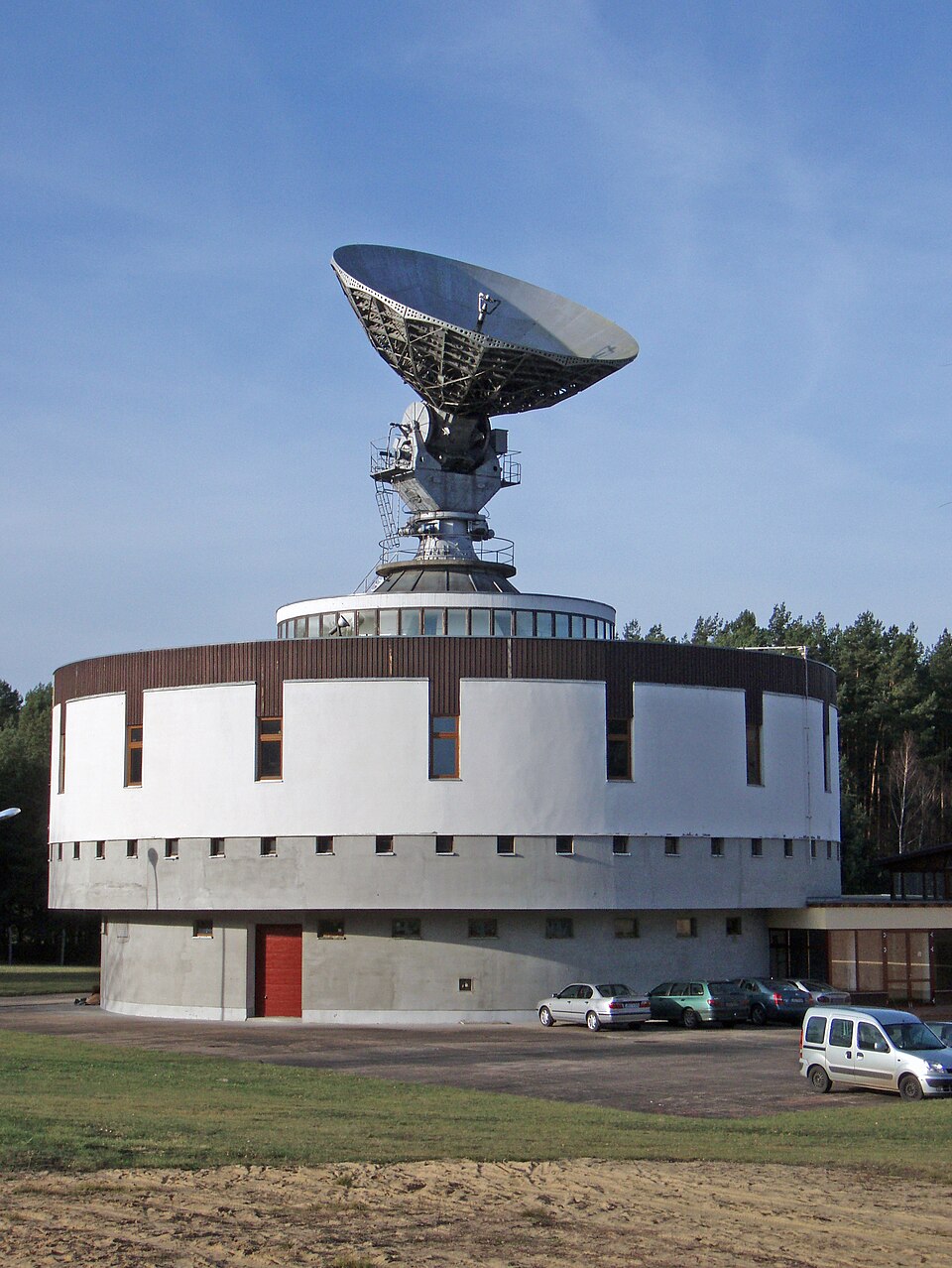
For the previous two years, they had already been working on the reactivation of the former Intersputnik earth station at Neu Golm in Brandenburg. Their aim was not simply to preserve the installation as a technical monument. They wanted to turn it into a working platform for physics lessons and the school’s astronomy course.
Students would be able to study radio signals, orbital motion, feedback systems, electronics and computer control using a real satellite antenna rather than a classroom model.
The project had already brought together teachers, students, radio amateurs and makers. What was still missing was a modern tracking computer.
“The goal was not to replace the entire installation, but to teach a Raspberry Pi how to speak the language of its surviving industrial electronics.”